
The modern workplace is no longer limited to a desk, a building entrance or a single way of working. Employees move between physical spaces and digital environments throughout the day, using technology to access offices, collaborate with colleagues, complete tasks and connect with workplace services. As these experiences become more connected, the way organizations think about identity must evolve.
A mobile credential is no longer just a digital replacement for an employee badge. Its true potential comes from its ability to connect people with the many systems and spaces they interact with every day.
From entering a building to accessing a workstation, releasing a document from a secure printer, opening a smart locker or reserving a meeting space, one mobile credential can support a seamless workplace journey.
But creating this connected experience requires more than simply adding a badge to a smartphone wallet. It requires an infrastructure that enables mobile credentials to work across the entire workplace ecosystem.
The Value of a Credential Is Defined by Where It Can Go
Traditionally, employee badges served one primary purpose: granting access to a building or specific areas within a facility. While physical access remains an important part of workplace security, today’s organizations are looking beyond the front door.
Hybrid work and flexible office environments have introduced new challenges. Employees may not have assigned desks, teams may collaborate across multiple locations and workplace services have become increasingly digital. Every interaction creates another opportunity for identity verification.
A truly connected workplace requires a credential that can move with employees throughout their day.
Imagine arriving at the office and using your smartphone to enter the building. After stepping inside, that same credential can authenticate you at your computer, release a confidential document from a printer, unlock a personal storage locker or check in at a pre-booked desk in the open space.
Instead of managing multiple credentials across different systems, such as apps, cards, QR codes, PINs and even physical keys, organizations can deliver a seamless and consistent experience through a single mobile identity.
This shift transforms the role of the credential from a simple access tool into an essential connection point between employees and the workplace.
Moving Beyond “Tap to Enter”
The phrase “mobile credential” often brings to mind a single interaction: tapping a phone at a door reader. While that experience is important, it represents only one part of what mobile identity can enable. The real opportunity lies in expanding the credential across the workplace.
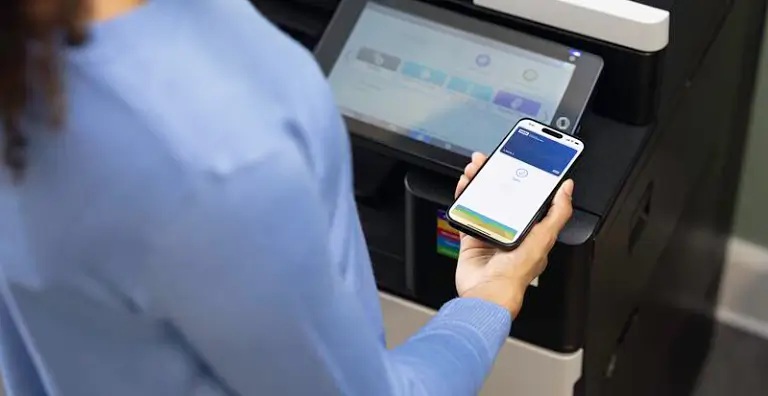
Secure printing is one example. In traditional environments, employees often use passwords, PINs or physical cards to release documents. With mobile credentials, users can authenticate quickly and securely using the same identity they already rely on for other workplace interactions. Tapping a mobile credential to release a print job also enhances security by ensuring sensitive documents are not left unattended at the printer, while reducing waste and costs by encouraging employees to print only what they truly need.
Smart lockers provide another example. As employees adopt more flexible work schedules, personal storage solutions are becoming increasingly important. A mobile credential can provide convenient, secure access to lockers without requiring additional keys, cards or authentication methods.
The same concept applies to meeting room systems, visitor management, kiosks, time-and-attendance solutions, and many other workplace technologies. As hot desking and flexible workspaces become the norm, organizations need modern workplace technologies that make employees’ daily interactions more efficient and convenient. With a single mobile credential, accessing these services can be as simple as tapping a phone.
Each connection creates a more unified experience — one where employees spend less time navigating systems and more time focusing on their work.
The Infrastructure Behind a Mobile-First Workplace
For mobile credentials to deliver this level of flexibility, organizations need technology that can bridge the gap between mobile identity and the devices and systems employees interact with every day. This is where reader infrastructure plays a key role.
Desktop readers, embedded modules and other mobile-ready technologies allow organizations to extend mobile credential capabilities beyond traditional access points. They provide the connection between a user’s digital identity and the workplace systems that rely on secure authentication.
This infrastructure helps organizations build an environment where mobile credentials can support a wide range of use cases — not just building entry.
The goal is not simply to digitize an existing badge experience. It is to create a foundation that allows organizations to continue expanding how and where identity is used.
As new workplace technologies emerge, a flexible reader ecosystem enables businesses to adapt without creating disconnected solutions.
Simplifying the User Experience Without Compromising Security
One of the biggest advantages of mobile credentials is that they align with how people already use technology.
Employees carry their smartphones everywhere. They use them to make payments, access accounts, communicate and manage their daily lives. Bringing that same familiar interaction into the workplace creates an experience that feels natural.
A mobile-first workplace eliminates many common points of friction.
Employees do not need to remember multiple access cards, manage additional authentication devices or learn complicated processes for different workplace services. Their credential is already available on the device they use every day.
At the same time, organizations gain stronger control over identity management.
Mobile credentials can support secure authentication methods, centralized credential management and remote provisioning. New employees can receive access without waiting for a physical badge, while access can be updated or removed remotely when roles change or employment ends.
This combination of convenience and security helps organizations create workplace experiences that are both user-friendly and resilient.
Creating a Future-Ready Workplace Ecosystem
The workplace will continue to evolve. New technologies will emerge, employee expectations will change, and organizations will continue searching for ways to make spaces more efficient, secure and connected.
The organizations that succeed will be those that view identity as more than a way to control access. They will see it as a foundation for creating better workplace experiences.
A mobile credential provides the flexibility to support this future. It can connect physical and digital environments, simplify daily interactions, and help organizations create a workplace that adapts to the needs of employees.
The future of workplace access is not about replacing one badge with one smartphone. It is about creating a single identity that works everywhere employees need it to — across entrances, devices, services and experiences.
By enabling mobile credentials across a broader ecosystem of readers, partner devices, and workplace applications, HID’s OMNIKEY technology helps organizations transform mobile identity from a simple access solution into a connected workplace experience. With mobile-ready readers and modules embedded into various partner devices, the OMNIKEY ecosystem is designed for interoperability and provides the infrastructure needed to activate secure, seamless and scalable workplace journeys. Ready to create a smarter, more connected workplace? Download the Solution Guide for a Smarter Workplace to discover how a unified mobile credential can simplify access, enhance security, and improve everyday employee experiences >>